
MPRE Study Timelines and Review Strategies
Part 4
Written by: Scot Goins, Director of Academic Achievement and Bar Success
In the previous parts of this MPRE series, we have had an introduction to the MPRE, looked at the 5 W’s, reviewed the four free recommended resources, and generally gotten a good sense of what you will need to know to attain the score you need in your relevant jurisdiction. In Part 4 of the series, we will bring it all together and discuss study timelines and review strategies.
MPRE Study Timelines
The typical ‘how long should I study for?’ questions that arise around the MPRE are nothing new. Generally, as I have mentioned previously, students tend to both overlook the importance of studying for the MPRE and the time requirements that success on this exam takes. Furthermore, almost everyone has heard a rumor of someone who studied for a day or two, or didn’t study at all. Some students believe that completing a professional responsibility course during law school is all that they need, while others erroneously believe that their own personal ethics and morals are enough to guide them.
All of this brings us back to the original question asked, and that is how long should you study for this exam? The answer, like so many things in law school, is that it depends on a variety of factors:
- Professional Responsibility Class (PR): The first thing to consider is whether or not you have taken a PR class? If you have not, or if your class was more focused on case law than the model rules and code referenced in Parts 2 and 3 of this series, then you will want to schedule additional time to give yourself time to get familiar with these resources.
- Standardized Test-Taking Skills: Are you a good standardized test taker? Do you normally do well on multiple-choice style exams? If the answer to either of these questions is no, then you will want to give yourself additional study time.
- Pass Urgency: Given various timelines and the requirements by almost all jurisdictions to obtain a passing score on the MPRE, the closer you get to your required deadline, the more urgent it is to obtain a passing score on the next administration of the exam. If you want to ensure that you pass on the next administration, you must give yourself adequate time.
- What Else Is Going On?: Take a look at your life, be it socially, academically, professionally, or any other area that requires your time and attention. Are you going to be busy? Can you afford to allocate enough hours to the MPRE and take focus away from these other areas, or do you have less available time to devote to this exam? Understanding your various time commitments can help you get a head start on your studying and ensure you put yourself in a position to experience success.
- Failure to Pass the MPRE Previously: This one should seem obvious, but if you have previously failed the MPRE, then you need to make sure that your next attempt is successful. If you look back on your previous attempt, almost always you will find that you didn’t allocate enough time to your studies. Plan to do things differently this time.
Keeping those five factors in mind, my generally recommended study time is a minimum of 40 hours to guarantee success. This obviously can vary individual to individual, but allocating a minimum 40 hours to this process will put you in the best place for success. This breaks down as follows:
- 12 hours of commercial bar vendor MPRE course videos
- 15 hours of practice tests (minimum 4) and review of these tests
- 8 hours of outline and notes review (provided by commercial bar vendor)
- 5 hours of model rule and code review (including focus on comments)
Individuals will vary, so if either of the five factors above are an issue for you, it is likely that you will want to devote additional hours to each of these areas to maximize your chance for success. You can break this down however you like, but I would recommend a minimum of two weeks of study at 20 hours a week, up to a maximum of 4-6 weeks (allocating the appropriate hours for your needs). Creating a plan for your studies in alignment with the aforementioned factors and the review strategies that follow will put you in a position to succeed. Remember that a failure to plan is a plan for failure, so make sure you plan!
Review Strategies
As indicated in the previous section, I generally breakdown MPRE study into 4 component parts, and my review strategies align with those.
- Commercial Bar Vendor MPRE Course Videos (12 hours): These courses provide lecture-style videos and accompanying notes that will cover the most heavily tested topics on the exam. Watch them at least once, and you may want to re-watch any heavily tested area or areas that you struggle with.
- Practice Tests and Review (15 hours): Much like the bar exam itself, all of the knowledge in the world is useless if you cannot apply it, and the MPRE is no different. Not only will practicing help you get a sense for what will be on the exam, but it will also help you to apply the knowledge you have learned and also to identify any gaps in that knowledge. A careful review of the answers and explanations will assist you in focusing your review, and also help you to understand the distinctions and nuances that will help you correctly identify the right answer.
- Outline and Notes Review: This goes hand-in-hand with strategies 1 and 2. It isn’t enough to mindlessly read outlines, but rather you need to engage with the material. By watching lectures and taking practice tests, you will enhance your review of the material by allowing yourself to focus on shoring up your weaknesses and building upon your strengths. Identifying where you need work, researching nuances, and clearly understanding distinctions will help you be successful. Lastly, it is important to firmly establish an understanding of the outline material, which will cover most of what appears on the exam.
- Model Rules, Code, and Commentary Review: This is what I like to call low-hanging fruit that is often overlooked. The vast majority of the MPRE comes from the ABA Model Rules of Professional Conduct and the ABA Model Code of Judicial Conduct. Thus, it only makes sense to spend some time reviewing the heavily-tested areas at the least, and also to focus on the commentary in those areas. When you take your practice exams, you will develop a sense of where to focus, and you can also refer back to Part 2 of this series. Remember, the commentary provides insight on how to deal with potential problem areas, insight into the mindsets of the drafters, and generally will be beneficial to study.
Conclusion
If you have explored the MPRE series in its entirety, then you will find yourself well-situated to be successful on this important exam. Remember, however, that merely reading through this and gaining the knowledge of how to be successful is not enough. You have to take this information and apply it to your life, your approach, and your studies. If you do that, and invest the time into obtaining new knowledge, enhancing your understanding, taking practice tests, and reviewing the materials appropriately, you will be successful on the MPRE.
Good luck and best wishes!









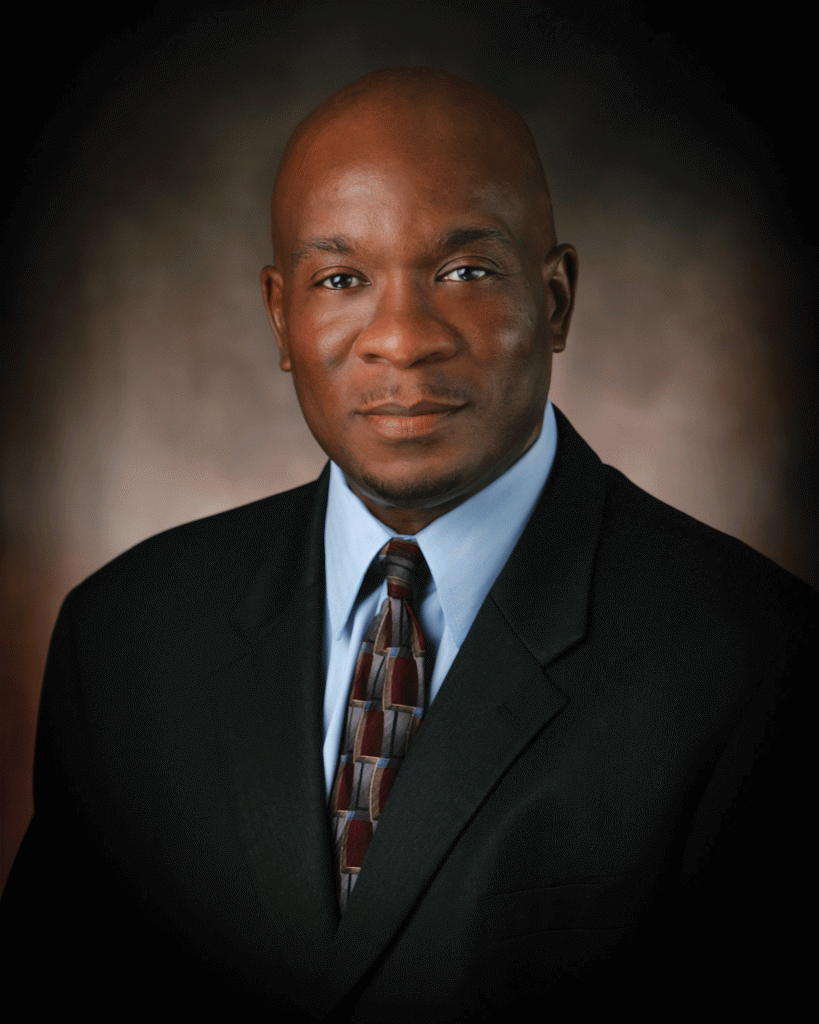
























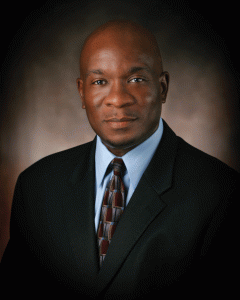 Atlanta’s John Marshall Law School (AJMLS) is pleased to announce the appointment of its 10th Dean, Jace C. Gatewood. Dean Gatewood succeeded Dean Malcolm L. Morris on January 1, 2020 as Interim Dean and CEO, becoming the first African American to serve in the role since the school’s founding in 1933.
 Atlanta’s John Marshall Law School is pleased to announce that the Council of the Section of Legal Education and Admissions to the Bar of the American Bar Association at its recent meeting found that the Law School demonstrated full compliance with the ABA Standards. The Law School has continuously been an approved ABA law school since 2009. The Law School recently took specific measures to ensure its compliance with the ABA Standards while continuing to meet its mission, viz., providing legal education opportunities to both traditional and non-traditional students.
 Atlanta’s John Marshall Law School (AJMLS) congratulates 1996 alumna, Angela Duncan, on her recent appointment as the 11th Superior Court Judge for Gwinnett County. Gwinnett County is Georgia’s second largest county and this position was created by Governor Brian Kemp to assist in the increasing caseload. It is speculated that Duncan will be Gwinnett’s first openly gay Superior Court judge as she joins a handful of other officials who are members of the LGBTQ community and hold high profile positions in the county.
 Atlanta’s John Marshall Law School (AJMLS) congratulates 1996 alumna, Tasha M. Mosley, on her recent appointment as District Attorney of the Clayton County Judicial Circuit.
 Atlanta’s John Marshall Law School (AJMLS) congratulates Judge Ethan Pham, Class of 2013, for his recent honor of being named one of Georgia Trend’s 40 Under 40. The 40 individuals were selected by the Georgia Trend staff from more than 400 nominations by readers throughout the state. Judge Pham is a Partner at the Law Firm of Nguyen & Pham LLC and an Associate Judge for the City of Norcross and City of Morrow.
 Atlanta’s John Marshall Law School (AJMLS) alumnus, Nick Schnyder, has only hired passionate legal minds from his alma mater since opening his firm, Nick Schnyder Law Firm, LLC, in August of 2016. Schnyder’s firm experienced rapid growth and turning to his fellow AJMLS alumni for support has enabled the firm to continue taking on difficult and rewarding cases.
 Atlanta’s John Marshall Law School Adjunct Professor, Jeffrey D. Diamond, was interviewed by WallHub as one of their insurance experts. The article goes in-depth about Georgia auto rates and insurers. Professor Diamond is a practicing litigation attorney who specializes in insurance law and related matters and teaches Insurance Law at Atlanta’s John Marshall Law School.
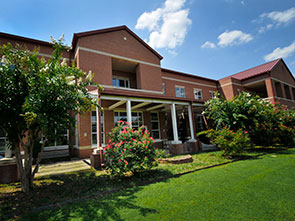 Few resources are available to provide free criminal legal services for homeless Veterans, despite the fact that legal services are often essential for removing barriers to obtaining or retaining permanent housing, receiving needed healthcare, income stability, and opening doors to employment. Atlanta’s John Marshall Law School (AJMLS), in partnership with the
 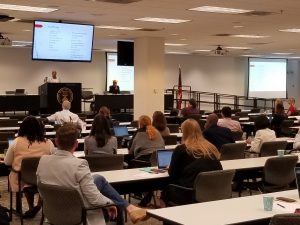 Several years ago, Georgia law schools formed GALE, the Georgia Association of Legal Externships. GALE has worked hard to standardize policies and practices for the supervision of externs in their field placements. Every year, the Georgia Association of Legal Externships hosts an annual Supervising Attorney training designed to help externship supervisors and their organization get the most out of working with law students. This year’s supervisor training was held at the Georgia State Bar on August 7, 2019. Assistant Dean of Experiential Learning, Dr. Bridgett E. Ortega facilitated a session on navigating cultural difference that was warmly received by the 75 plus attorneys in attendance.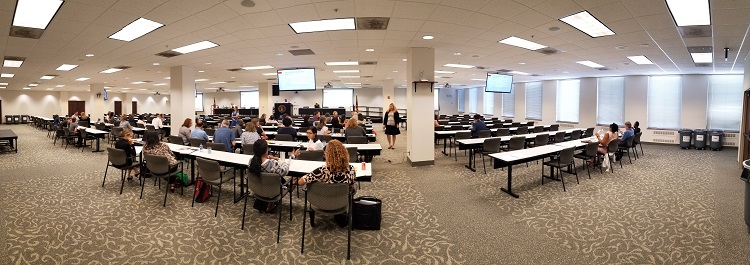
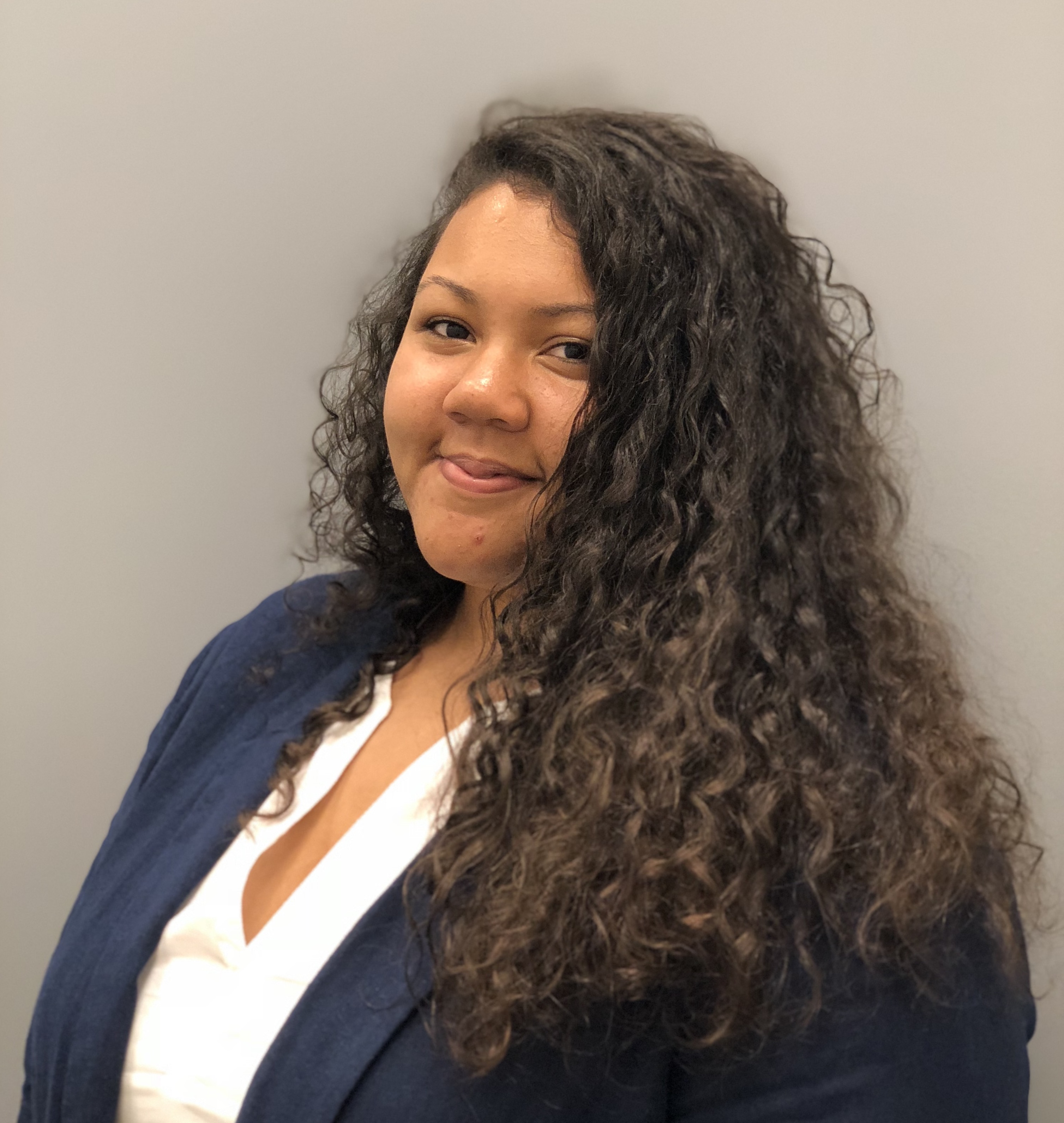


 Where were you raised: I was born and raised in Macon, Georgia.
 Where were you raised:
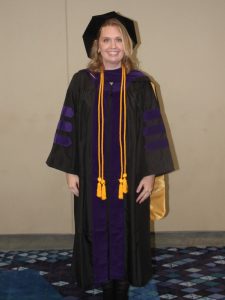 Having worked as a paralegal for a trial attorney for approximately four years and with a one-year old daughter, Jilian Sheridan decided to enroll in the part-time program at Atlanta’s John Marshall Law School. Through this program she was able to find a supportive community of students with similar struggles who understood the difficulty in finding a balance between outside responsibilities while pursuing the dream to become an attorney. Sheridan was a part of the December 2018 graduating class and therefore she was able to take the February bar exam. The day before law school graduation she found out she had passed the exam! She graduated magna cum laude and valedictorian.
 Atlanta’s John Marshall Law School (AJMLS) Adjunct Professor and Acting District Attorney in Cobb County has been named the new Chief of Staff at the Georgia Bureau of Investigation (GBI).
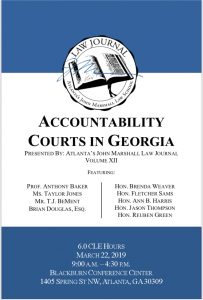 arch 22, 2019, Atlanta’s John Marshall Law School (AJMLS) will host its annual Law Journal Symposium. This event, held at the Blackburn Conference Center from 9:00 a.m. – 4:30 p.m., will consist of many esteemed guest speakers and judges all focused on this year’s topic: Accountability Courts in Georgia. Registrants will have the opportunity to receive 6.0 CLE credits for this event. Those seeking CLE credit must register under “Attorney Admission” and pay $30 (costs will cover the Bar’s booking fees). However, the event is free and open to any law students, judges, legislators, and the general public who wish to attend.
 Atlanta’s John Marshall Law School (AJMLS) Professor and Director of the Criminal Justice Certificate Program, Jonathan A. Rapping, helped to facilitate the
  Atlanta’s John Marshall Law School (AJMLS) congratulates Vincent A. Lotti, Class of 2010, for his recent appointment as a Henry County magistrate judge. At the Law School, Lotti served as both a Peer Mentor and a Student Ambassador, and was a three time Dean’s Award recipient.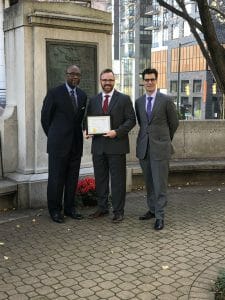
 Atlanta’s John Marshall Law School (AJMLS) is saddened to announce the loss of our dear friend and colleague, Allan Brezel. Allan was the Law School’s Associate Dean for Finance (and prior Chief Financial Officer). Known for his fatherly demeanor and dry humor, the AJMLS family feels lucky to have met Allan in early 2011. Our hearts are with his family, who were his everything.
 *Madison, Wisconsin – The National Conference of Bar Examiners (NCBE) and the Council on Legal Education Opportunity, Inc. (CLEO) are pleased to announce a new collaboration in support of their shared goal of increasing diversity and inclusion in the legal profession. NCBE has provided funding to bolster CLEO’s programs that help individuals from traditionally underrepresented racial and ethnic groups and disadvantaged communities achieve success in law school and prepare to take and pass the bar exam. For over 50 years, CLEO has successfully contributed to increasing the number of lawyers from diverse backgrounds in all sectors of law.
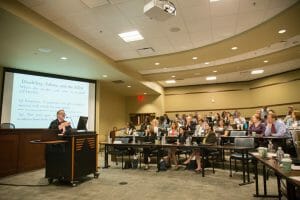 Atlanta’s John Marshall Law School (AJMLS) Professor Jeffrey Van Detta, the John E. Ryan Professor of International Business and Workplace Law, recently gave two lectures based on his most recently completed works of legal scholarship.
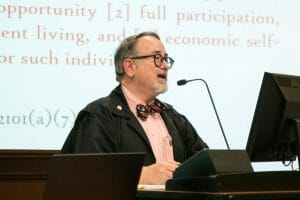 On October 18, 2018, Professor Van Detta was a featured presenter at the 25th Annual Georgia ICLE Supreme Court Update. Following a presentation he made on a blockbuster 2013 SCOTUS case concerning the Alien Tort Statute (ATS) in 20th Annual Supreme Court update in 2013, Professor Van Detta lectured on a pair of 2018 SCOTUS cases that substantially limited the kinds of claims that can be made under both the ATS and the anti-terrorism exceptions to foreign-nation sovereign immunity under the Foreign Sovereign Immunities Act (FSIA). The paper he wrote for the ICLE program has been accepted by the University of Indiana Robert H. McKinney School of Law’s International & Comparative Law Review, for publication in its Spring 2019 issue. In addition, the University of Indiana has invited Professor Van Detta to be one of the featured speakers at the Law Review‘s Annual Symposium in Spring 2019. Rubin v. Islamic Republic of Iran and Jesner v. Arab Bank, PLC: SCOTUS Trims To Statutory Boundaries The Recovery In U.S. Courts Against Sponsors of Terrorism and Human-Rights Violations Under FSIA and ATS, 29 Indiana Int’l & Comparative Law Review ___ (Spring 2019).


 The Atlanta Bar Association is hosting their
  Atlanta’s John Marshall Law School (AJMLS) alumna, Fallon McClure, currently serves as the Georgia State Director for
  While at Atlanta’s John Marshall Law School, Jenkins was a seven-time Dean’s Award recipient. From August of 2009 until August of 2010, Jenkins was the law clerk/staff attorney for the Superior Courts of the Northern Judicial Circuit, primarily working with Chief Judge John H. Bailey, Jr. Following his clerkship, Jenkins practiced law with his father, at Jenkins Law, LLC, in a general law practice primarily consisting of domestic relations, personal injury, criminal defense, contract litigation, estate matters, corporate law, and real estate law. He spent a great deal of time in the courtroom litigating all types of cases. Additionally, Jenkins is a registered neutral and has mediated many cases privately and for the 10th District Alternative Dispute Resolution program, ranging from personal injury to divorce and custody lawsuits.**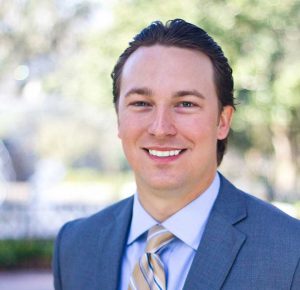

 Atlanta’s John Marshall Law School (AJMLS) is thrilled to congratulate Erik Provitt, Class of 2016, for his recent acceptance into the American Bar Association (ABA) Section of Real Property, Trust, and Estate Law Fellows Program.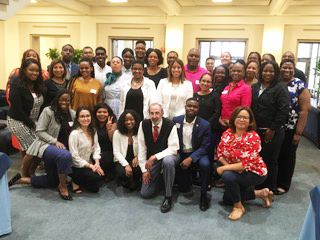
 The Department of Justice (DOJ) recently recognized the